
Buying an existing home in Greater Brisbane often means competing with other buyers for a property that may need work. A new build can feel like a leap into contracts, builders and unknown costs. A house and land package Brisbane buyers can secure sits between those two options: you buy the block and the home from one developer or builder, under two contracts, with a fixed price and a set timeline. The package price is only the start, though. The loan structure, the estate you choose and the costs the contract leaves out will decide whether the deal works for your household.
Table of Contents
- Quick Takeaways
- What a House and Land Package Includes
- How Lenders Fund the Build
- Costs Outside the Contract
- Choosing the Estate, Not Just the Block
- Package or Separate Build?
- First Home Loans on a Package
- Mistakes That Cost Buyers Most
- How We Structure Your Loan
- Frequently Asked Questions
- References
Quick Takeaways
| Key Insight | Explanation |
|---|---|
| Two contracts, two clocks | The land and the build are signed separately, so check the land settlement date against the build start and completion dates before you sign either contract. |
| A fixed price has limits | Package prices cover a defined inclusions schedule. Site works, connections, driveways and upgrades can sit outside the headline figure. |
| Estate location shapes daily life | Packages often sit on newer outer estates. Test the commute at the hours you actually travel, not the brochure version of the route. |
| Get the loan assessed on the contract price | Lenders lend against the valuation, so a shortfall can appear late. Get a formal assessment against your chosen design before committing. |
| Progress draws drive your cash flow | Construction funds are usually released in stages tied to build milestones, so plan for rent or current repayments and interest overlapping during the build. |
| Block size and orientation matter | Compact lots limit outdoor space and privacy. Check which way the home faces and where the sun and breezes fall before choosing a design. |
What a House and Land Package Includes
A house and land package bundles the purchase of a block with the construction of a new home. You sign two agreements, one for the land and one for the build, but you work with one builder through the whole process. Most packages in Brisbane are created through partnerships between builders and land developers in new residential estates, where builders secure suitable blocks and match them with home designs that suit the land’s size, orientation and site conditions.
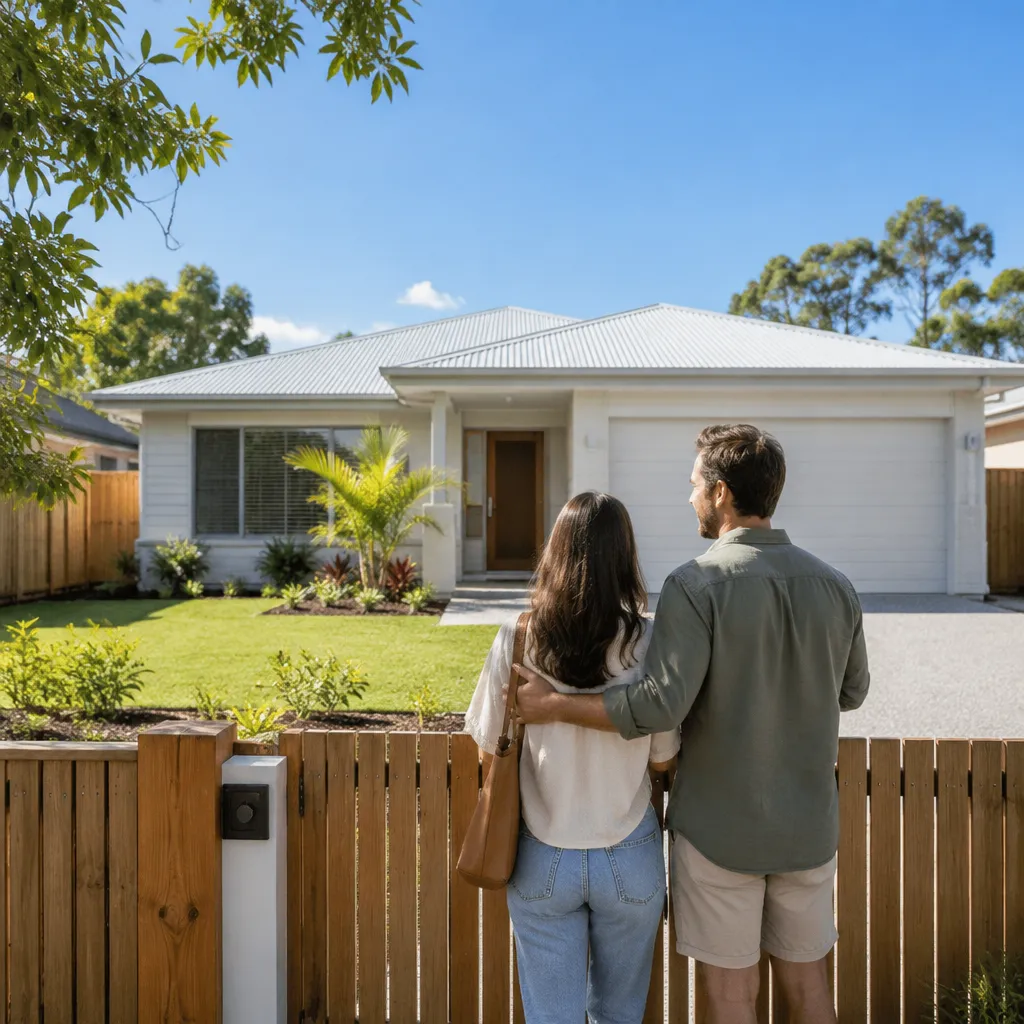
In practice, you can choose a block already paired with a design, or bring your own block and match it to one of the builder’s plans. The arrangement suits first home buyers because it removes the search for a builder and the risk of coordinating two separate teams who may point at each other when something goes wrong.
Two contracts, two sets of deadlines
The land contract and the build contract run on different clocks. The land usually settles first, and the build contract sets its own start and completion timeframes once the site is prepared. If those dates do not line up, you can end up paying for land and rent at the same time, and that is where a lot of cash flow stress begins.
A common mistake is signing the land contract on the strength of a settlement date the builder has not confirmed. Ask for both timelines in writing, then check how each contract treats delays caused by approvals, weather or site conditions.
The cheapest package is the one where the contract price and the cash you need to move in have been compared line by line.
Why the fixed price needs a close read
Packages are often marketed with a fixed price and a set timeframe, and that certainty is real. Developers buying large parcels and building several homes at once can pass on some cost efficiencies, which is one reason packages look good on paper. A fixed price is only as firm as its inclusions schedule, and that schedule is where the detail lives.
Look for standard inclusions such as floor coverings, kitchen appliances, window coverings, driveways and landscaping. Anything marked as an allowance, an upgrade or a provisional sum is a signal that the final cost may move.
Pro tip: Ask the builder to mark every allowance on the inclusions schedule, then price what you would actually choose for each one. The gap between those two numbers is your real starting budget.
How Lenders Fund the Build
Most people who buy a package use a construction loan that is released in stages, rather than receiving the full amount at settlement. Progress payments are typically tied to build milestones such as the slab, frame, lock-up and completion. The exact stages depend on the lender and the builder’s contract, so check both before you sign.
Understanding how draws work matters because interest accrues on what has been drawn. Early in the build you may be paying interest on the land and a fraction of the construction cost while your current rent or mortgage continues. Put that overlap into your monthly budget rather than discovering it at the first progress claim.
Progress draws and interest during construction
Lenders typically release money when a progress claim is approved, and approvals can take longer than buyers expect. A late inspection can hold up a payment, which pushes out the next stage and extends the period you are paying interest with nothing finished to show for it. Ask your lender how long a claim takes to clear and who arranges the inspections.
In practice, the buyers who cope best are the ones who knew the draw schedule before the first shovel went in. They had a clear buffer for the months when the house was mostly a slab and a set of frames.
When the valuation comes in below the contract price
Lenders assess the finished home and land against a valuation, and that figure may come in below the contract price. When it does, the difference usually has to come from your deposit or savings, which can derail a package that looked affordable on paper. Ask your broker to model that scenario early, before you commit to upgrades.
This tends to surface when buyers choose a premium design with expensive inclusions on an estate where comparable homes sell for less. The house is the same, but the lender only lends against what it believes the finished property is worth.
Costs Outside the Contract
The package price rarely covers everything you will pay to get the keys. Some costs are obvious, such as legal fees, while others catch buyers when they reach the site stage. Build a full cost sheet before you commit, and treat it as the number you actually need to borrow against.
Think of the contract as the core of your budget, not the whole budget. Every item the contract leaves out needs its own line in your spreadsheet, with a realistic estimate rather than a hopeful one.

Site works and what the land price leaves out
Site preparation, soil testing, retaining walls, connections for water, sewer and power, and driveway work can all sit outside the headline package. Some land contracts include servicing and some do not, so ask the developer exactly what is covered. The builder’s site assessment can also reveal soil conditions that need extra footings or preparation, which may change the final cost.
Upgrades, variations and the display home effect
Display homes are built to sell, and they are usually fitted out with upgrades that are not in the base contract. A kitchen that looks like the one on the showroom floor can add a sizeable amount to the price. Make a list of what you would change from the base design, then price each change before you sign.
Variations after signing are where budgets quietly drift. Moving a wall, changing a window or upgrading tiles can trigger a variation that is priced higher than you expected. Put every change in writing and get the revised price before you approve it.
Pro tip: Hold a contingency inside your budget for items the contract leaves out, and treat that money as already spent until the keys are in your hand.
Transfer duty, legal fees and first home concessions
Transfer duty on the land and conveyancing fees belong in the picture from day one. Eligibility for Queensland first home concessions depends on your circumstances and the property price, so confirm the current rules with the state revenue office and your conveyancer. Discovering after signing that a concession does not apply is one of the more expensive surprises in this process.
Choosing the Estate, Not Just the Block
Packages are often sold on new estates, which means the location decision is half the decision. Developers buy large tracts of land where they can subdivide economically, and that often puts estates on the outskirts of the city, away from the schools, shops and jobs you may need. The block may be attractive, but the commute is what you live with every day.
Check the drive, bus or train times at the hours you would actually travel, not at 10am on a Sunday. Also look at what is built, what is planned and what is still an empty paddock, because a view across an open field can change once the next stage is released.
Commute, schools and the services that come later
Newer estates often rely on services that arrive in stages, including shops, parks and public transport links. A home that is marketed as close to everything may depend on infrastructure that has not been built yet. Ask the developer for the release plan in writing, and check with your local council about planned roads and facilities.
Lot size, neighbours and outdoor space
Subdivided blocks can be compact, which limits outdoor space and places neighbours closer than many buyers expect. That affects privacy, storage and where you can put a clothesline or a shed. Before you choose a design, check how the home sits on the block and which side gets the afternoon sun.
Orientation is one of the cheapest things to get right and one of the most expensive to fix later. A home that faces the wrong way can cost more to cool for its whole life, so ask the builder to explain how the design is positioned on the block.
Package or Separate Build?
The main alternative to a package is buying land on its own and engaging a builder of your choice. In theory, that gives you more control over design, builder selection and inclusions. In practice, it adds more contracts, more coordination and more ways for the project to stall.
Buying an established home is the third path. It avoids construction risk and the wait, but it puts you in competition with other buyers and can leave you with older systems that need attention.
Where a package wins and where it loses
A package wins when you want one builder, one timeline and a clear price for a new home, especially if you are buying your first property. It loses when your must-have features sit outside the builder’s range, or when you need to be near a specific school zone or workplace that the estate does not serve well.
| Approach | Best For | Main Trade-off |
|---|---|---|
| House and land package | Buyers who want one builder, a defined build price and a set timeline | Limited design choice, and the location is tied to the estate |
| Land first, separate builder | Buyers who want a custom design and a builder they have chosen | More contracts, more coordination and a greater risk of delays |
| Established home | Buyers who want to move in quickly and inspect the finished property | Competition with other buyers and possible renovation costs |
Use this table as a starting point, not a verdict. Compare the full cost of each path, including site works, interest during construction and the months you may be paying rent and a mortgage at the same time.
First Home Loans on a Package
First home buyers have the most to gain from a package and the most to lose from a poorly structured loan. The deposit, the guarantee options and the first home buyer concessions all interact, and a change in one can shift the others. Start that conversation before you pick a design, not after.
Our First Home Loans service is built around that sequence: work out borrowing power first, then match the package to what the household can carry through construction.

Deposit, guarantees and what lenders want to see
Lenders look at income, existing debts, savings history and where the deposit came from. If you are using a guarantor or a government-backed guarantee scheme, confirm the price cap and eligibility rules for the specific property before you sign. Some package prices sit close to those caps, so a small difference can decide whether you qualify.
Timing the first home buyer concessions
Concessions often depend on the contract date, the completion date or whether you will live in the home as your principal place of residence. Those tests can differ, so a package with a long build may follow a different timeline from a standard purchase. Confirm which test applies to your contract before you rely on the saving.
Mistakes That Cost Buyers Most
Most package problems are predictable. They come from signing before the numbers are tested, from treating a display home as the price, or from treating a builder’s timeline as a promise. Each one is avoidable if you slow down at the right point.
Signing before the loan is assessed
Some buyers sign the land and build contracts, then discover the lender will only lend a lower amount based on the valuation or a different income assessment. That leaves a deposit at risk and a negotiation with a builder you have already committed to. Get a formal loan assessment against the contract price before you sign anything you cannot easily walk away from.
Treating the display home as the price
The display home shows what is possible, not what is included. A buyer who falls for the finishes can end up with a base contract that looks nothing like the showroom. Compare the inclusions schedule with the display, then price the difference before you choose a design.
Pro tip: Ask for the contract’s cancellation terms, deposit refund conditions and finance clause in plain language before you sign. If the deadline for loan approval is shorter than your lender needs, you will be pushed into a decision you did not plan to make.
How We Structure Your Loan
Mortgage World was founded in 2004 by Gary Willmott, who brings more than 25 years of experience to home loan clients. Our approach to a house and land package follows the same order as every loan we arrange: clarity on all the available options first, then a structure that maximises borrowing power for your situation, with an eye on future wealth creation.
We work with a range of trusted partner lenders, so the loan can be matched to the builder’s progress schedule, the valuation risk and the concessions you may be eligible for. You get a single point of contact from the first conversation through to settlement, with flexible meeting options and digital tools for sharing documents.
One point of contact from pre-approval to settlement
A house and land package involves several parties: the developer, the builder, the conveyancer and the lender. Having one contact who tracks progress claims, valuation results and documents reduces the chance that a missed form delays a draw. That matters most when the build runs late and interest keeps accruing.
Matching the loan to the build schedule
We structure House and Land Finance arrangements around the specific stages of a package, from land settlement through progress claims to completion. Our Builder Broker service looks at the same timeline from the builder’s side, so the loan and the build contract are planned together rather than discovered apart. The goal is a loan that works through the build, not one that only works on the day you sign.
Frequently Asked Questions
How is a house and land package different from buying an established home in Brisbane?
An established home is bought as it stands, with its age, condition and location already fixed. A package gives you a new build and a land contract signed alongside it, which usually offers more certainty on price and timing. You take on construction risk and a longer path to moving in, so the trade-off needs to suit your timeline.
Can I use a first home loan for a house and land package?
Usually yes, but eligibility depends on the lender, the property price, the deposit and the concession rules that apply to new builds. Confirm each requirement before you sign, because some programs apply different tests to land and to construction.
How much should I budget beyond the package price?
Budget for site works, connections, upgrades, legal fees, transfer duty where it applies and interest during construction. The contract does not cover all of these, so build your own cost sheet and treat any gap as a required buffer rather than optional spending.
Will the lender lend the full contract price?
Not always. Lenders generally lend against the valuation, so if it comes in below the contract price, the difference must come from your savings or deposit. Ask for an assessment against your chosen design before you commit.
Is a package a good choice on an outer estate?
It can be, if the commute, the timing of local services and the lot size suit your household. Check the route you would drive at peak times, the release plan for shops and transport, and whether the block gives you enough outdoor space and sun.
What should I check before signing the land contract?
Check the settlement date, the build contract timeframe, the cancellation and finance clauses, the deposit refund terms and the inclusions schedule. Where possible, get your loan assessment in place before signing anything that is hard to exit.
If you have bought a house and land package in Greater Brisbane, share your experience with us, especially the cost you did not expect.
We would love your feedback and any insights you would share with others. What perspective would you add?