
Plenty of Brisbane buyers assume a low deposit home loan is a loophole that only desperate borrowers use. In practice, it is one of the most ordinary tools in the market, and many people who would benefit from it never hear about it because they start by searching for a house instead of a loan structure. A deposit of 5 per cent, 10 per cent or somewhere in between changes your borrowing costs, your eligibility and which property types are realistic. This guide sets out the real options available to Queensland borrowers, where each one works, and where they tend to fall over.
Table of Contents
- Quick Takeaways
- What a Low Deposit Really Means in Brisbane
- The Queensland Housing Finance Loan
- The Five Percent Deposit Scheme for First Home Buyers
- Lenders Mortgage Insurance and the Real Price of a Small Deposit
- Comparing Your Low-Deposit Routes Side by Side
- House and Land and Builder Contracts with a Small Deposit
- Common Reasons Low-Deposit Applications Stall
- Frequently Asked Questions
- References
Quick Takeaways
| Key Insight | Explanation |
|---|---|
| The deposit is a percentage, but lenders judge the dollars | A 5 per cent deposit on a $1 million home is $50,000, the same figure the Government used in its Brisbane example. Work out your dollar amount before you set a budget. |
| The Queensland loan starts at a 2 per cent deposit | The state’s low-deposit loan requires at least a 2 per cent deposit plus the initial purchase costs, and you cannot own or part-own another property. |
| Household income has a ceiling | The state loan caps gross annual household income at $141,000, so couples need to check the combined figure, not just the higher salary. |
| Savings history counts as much as the deposit | Regular savings and a clean credit file are part of the test, so a deposit that arrived as a recent lump sum or gift can slow your application. |
| LMI is the cost that surprises people | Lenders Mortgage Insurance is usually required above 80 per cent loan-to-value and is often added to the loan, so compare total cost, not just the rate. |
| House and land contracts need a separate cash check | Builder deposits and progress payments can absorb your savings before the loan is fully drawn, so confirm the full cash requirement before you sign. |
What a Low Deposit Really Means in Brisbane
A low deposit home loan is any mortgage where the amount you borrow is high relative to the price of the property. Lenders measure that relationship as the loan-to-value ratio, or LVR. A 5 per cent deposit means you are borrowing 95 per cent of the purchase price, which is a 95 per cent LVR, while a 20 per cent deposit gives you an 80 per cent LVR.

The percentage matters less than the dollar figure. On an $800,000 house in Greater Brisbane, a 5 per cent deposit is $40,000 and a 10 per cent deposit is $80,000. That $40,000 gap can be the difference between settling in a few months and spending another year saving, so do the sum in dollars before you talk about rates.
Why the deposit is only one test
Lenders look at where the deposit came from, how long it has sat in your account, and whether your income can carry the repayments once the loan is larger. A buyer with a 5 per cent deposit that is clearly genuine savings often gets further than a buyer with 15 per cent that arrived as a gift the week before the offer. The deposit opens the door, but the paper trail decides whether you walk through it.
How a small deposit narrows your options
A smaller deposit narrows the field in two ways. Fewer lenders accept high LVRs on certain property types, and a larger loan pushes most borrowers into paying lenders mortgage insurance. Both points matter more for apartments, properties that need renovation and land-only purchases than they do for a standard house in an established area.
Pro tip: Before you fall for a property, ask your broker for the maximum LVR your target lender allows on that exact property type. A standard house and an apartment with the same price can have very different limits.
The Queensland Housing Finance Loan
The Queensland Government offers a low-deposit home loan, listed on the state’s website as the Queensland Housing Finance Loan. It can be used to buy an established house, unit, townhouse or duplex, or to build a house. The state describes it as helping Queenslanders with a stable, ongoing income who can afford repayments and ownership costs, and who can pay the initial purchase costs plus at least a 2 per cent deposit.
The 2 per cent figure gets attention, and it is also the one that catches people out. You still have to pay the purchase costs and that minimum deposit, and the state assesses whether you have enough savings to cover both. A buyer who arrives with a 2 per cent deposit and no buffer for legal fees and other upfront costs will usually struggle with the savings test.
Who qualifies under the state scheme
You must be 18 or older, live in Queensland, be a citizen or permanent resident of Australia, and intend to live in the home. If you are married or partnered, both partners must apply, and anyone who would own or part-own the property must also be an applicant. Every applicant has to meet every criterion, so one partner’s circumstances can stop the whole application.
Employment history is measured by employment type. The state asks for at least one year in permanent work, two years in casual work, or three years if you are self-employed. Self-employed borrowers often get stuck here, because a strong income over the last twelve months still does not meet the three-year test.
Income ceilings and the no other property rule
The loan caps gross annual household income at $141,000 before tax. That is a household figure, so a couple with two incomes needs to add both together. The rule that you cannot own or part-own another property also excludes people who have inherited a share of a family home or still hold a unit they rent out.
The state loan has no maximum loan amount, but the amount you can borrow is set by what you can afford to repay. The assessment includes ongoing costs such as rates and insurance, not only the mortgage itself. A loan that looks affordable on the mortgage alone can fail once those costs are added.
Pro tip: Calculate the household income test using gross figures from your most recent payslips and tax returns, then check whether overtime or allowances will be counted. Discovering a gap at this stage costs weeks, not minutes.
The Five Percent Deposit Scheme for First Home Buyers
The Australian Government’s 5% Deposit Scheme is designed for first home buyers with a minimum 5 per cent deposit, and it also covers single parents and legal guardians. The Government has described the expanded scheme as letting a first home buyer in Brisbane purchase a $1 million home with a $50,000 deposit. That example shows the arithmetic clearly: the deposit is 5 per cent of the price, and the rest is financed through a participating lender.
The scheme works differently from a standard low-deposit loan because the Government’s involvement changes how the lender assesses risk. Eligibility rules, property price settings and the list of participating lenders are set federally and can change. Read the official page before you lock in a timeline, because a rule that was true when your broker first ran the numbers may have moved.
Where the federal scheme and the state loan differ
The state loan is a direct Queensland Government product, while the federal scheme works through participating lenders. The two carry different rules, and a lender still applies its own credit assessment on top of either one. Compare them as separate applications rather than assuming an approval for one carries across to the other.
Costs that sit outside the deposit
Deposit percentages are calculated on the purchase price, but first home buyers also face upfront costs such as legal fees, building and pest inspections and, depending on the property and any concessions, stamp duty. A common mistake is to treat the deposit as the only cash needed at settlement. Build those costs into the budget before you decide that 5 per cent is enough.
Lenders Mortgage Insurance and the Real Price of a Small Deposit
Lenders Mortgage Insurance, usually called LMI, protects the lender if a borrower defaults on a loan with a high LVR. Most lenders require it when the loan exceeds 80 per cent of the property value, so a buyer with a 5 per cent deposit will usually pay it. Some government schemes and lender policies treat the cost differently, which is why you should ask about it early.

LMI is often capitalised, meaning it is added to the loan balance rather than paid upfront. That helps cash flow at settlement, but you then pay interest on the premium for the life of the loan. Comparing two loans on the advertised rate alone hides this cost entirely.
Why capitalised LMI deserves a close look
The premium can add a meaningful amount to what you owe, and the interest on that amount compounds over the years. A buyer who saves a few thousand dollars at settlement may pay more over the full loan term. Always ask whether the premium is paid upfront or capitalised, because the answer changes the real cost of the loan.
Comparing quotes on total cost
Quotes differ between lenders for the same loan size and LVR, so ask each lender you consider for the LMI premium in writing. A broker who puts those quotes side by side can show you the total amount owed after settlement, which is where the real gap usually appears.
The cheapest advertised rate can become the most expensive loan once the insurance is added to the balance.
Pro tip: Ask whether the LMI premium is paid upfront or capitalised, and whether the lender has a policy that waives or reduces it for certain borrowers. Those two answers alone can change the cash you need at settlement significantly.
Comparing Your Low-Deposit Routes Side by Side
There are three main routes for a small deposit in Queensland, and each suits a different buyer. The right one depends on your income structure, your savings history, whether you have owned property before, and the type of home you want. Treat the table below as a starting point rather than a final answer.
Which route suits which buyer
The state loan suits Queensland residents who meet the strict income, savings and property tests and want a government product. The federal scheme suits first home buyers who meet its criteria and want the Government’s guarantee. A standard lender loan with LMI suits buyers who fall outside both schemes or want a wider choice of lenders and property types.
| Option | Best Suited To | Main Trade-off |
|---|---|---|
| Queensland Housing Finance Loan | Queensland residents with stable income, a savings history, no other property and household income under the state cap | Strict eligibility tests and the rule against owning or part-owning another property |
| Australian Government 5% Deposit Scheme | First home buyers, including eligible single parents and legal guardians, buying within the scheme’s settings | Eligibility and price settings are set federally and can change, so confirm them before committing |
| Standard lender loan with LMI | Buyers who do not meet state or federal criteria, or who want a wider range of lenders and property types | The LMI premium adds cost, and approval depends on each lender’s policy |
Running the numbers before you choose
Run each route through the same budget before you compare them. Use the same purchase price, the same deposit, and the same living expenses, then look at the repayment, the LMI cost and the cash needed at settlement. A route that looks cheaper in one column can cost more once every column is filled in.
House and Land and Builder Contracts with a Small Deposit
House and land packages and builder contracts change the deposit conversation because the cash requirement is spread across the build. Many contracts require a deposit at signing, then progress payments tied to construction stages. Your lender usually funds the land first and releases the rest as the build progresses, so your savings can be stretched before the loan is fully drawn.
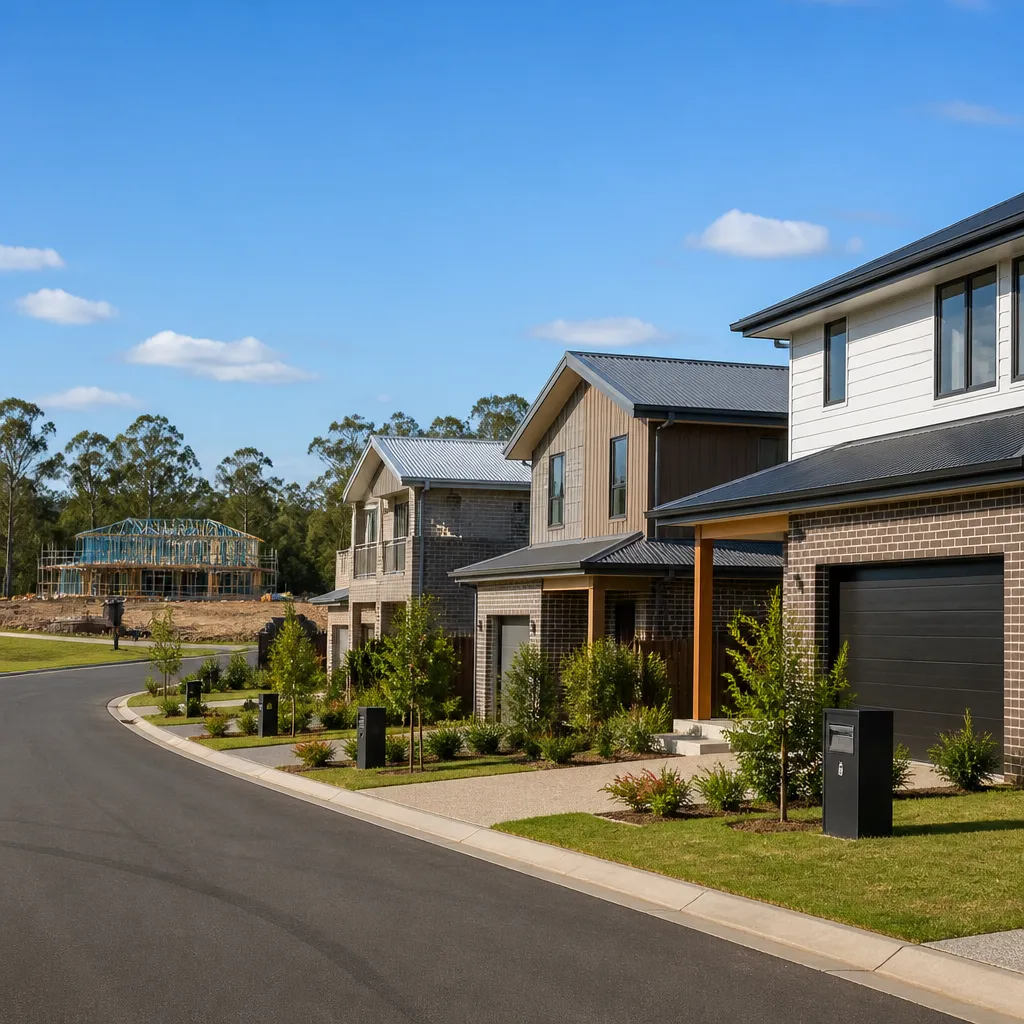
Progress payments and the cash you need at each stage
A common mistake is to calculate the deposit on the land price and forget the cash needed for the builder’s early stages. If the contract demands an upfront payment, that money must come from savings that are already verified. Credit lines and future property sales are rarely a safe source unless the lender has approved that structure in advance.
Pro tip: Ask the builder for the full payment schedule in writing and give it to your broker before you sign. A schedule that looks reasonable on paper can leave you short at the stage where you have the least cash.
Using Builder Broker support to check the numbers
Builder Broker support is about checking the contract against the loan structure before you sign. That means confirming the deposit at signing, the progress schedule, any variation allowances and whether an interest-only period applies during construction. A builder can be entirely honest and the loan can still fall short by the time the slab is poured.
Common Reasons Low-Deposit Applications Stall
Most low-deposit applications do not fail on the deposit itself. They stall because of documentation, a mismatch between declared spending and actual bank activity, or a debt that looked small on the application form.
Savings that cannot be traced
Lenders will ask for statements showing where the deposit came from and how long it has been held. Cash that moves through several accounts in the weeks before application invites questions. A gift needs a signed declaration confirming the money does not have to be repaid, so keep that paperwork ready from the start.
Credit limits and small debts
A credit card with a $10,000 limit can reduce your borrowing capacity even when the balance is zero, because many lenders assess the full limit. Buy-now-pay-later accounts, personal loans for vehicles and unpaid tax debts can also cut the amount you can borrow. Close unused cards and clear small debts before you apply where that is practical.
Living costs that do not match the bank statements
Lenders compare your declared living expenses with your bank statements. A budget that claims a modest monthly figure for groceries and entertainment, when the statements show far more, will be reduced or questioned. Use real figures from the most recent statements and be honest on the form.
The applications that succeed are the ones where the story holds together across the form, the statements and the payslips. Consistency is more persuasive to a lender than a larger deposit.
Frequently Asked Questions
Can I get a low deposit home loan in Brisbane with a 5 per cent deposit?
Yes, a 5 per cent deposit is a common starting point. Approval still depends on your income, expenses, savings history and the property type. First home buyers may be able to use the federal 5% Deposit Scheme, while others use a standard lender loan with LMI.
What is the minimum deposit for the Queensland Housing Finance Loan?
The state requires at least a 2 per cent deposit plus the initial purchase costs. Applicants must have enough savings to cover both, and the savings test is applied alongside the income and employment rules.
Do I always have to pay LMI with a small deposit?
Most lenders require it when the loan exceeds 80 per cent of the property value, although government schemes and some lender policies handle it differently. Ask for the premium in writing and check whether it will be capitalised into the loan.
Can I use a gift from family as my deposit?
Often yes, but the lender will want a signed statement confirming the money is a gift that does not need to be repaid. You will also need evidence of how the funds reached your account.
Does a low deposit loan work for house and land packages?
It can, but the deposit and progress payments must be checked against the loan drawdown schedule. Confirm the cash needed at each construction stage before you sign the building contract.
What was the one cost or document that caught you out when you tried to buy with a small deposit, and what would you do differently next time?
References
- Queensland Government page on eligibility, loan amounts and costs for the low-deposit home loan
- Australian Government guide to the 5% Deposit Scheme for first home buyers
- Government media release on 5% deposits for first home buyers, including the Brisbane example
- 2019 impact analysis of the First Home Loan Deposit Scheme and its loan-to-value settings